Essay
Flow, Mindfulness, and the ROI Trap
When time starts being judged like an investment, it becomes harder to protect the kind of attention that lets ideas breathe.
One evening I sat down to fix a small issue in the codebase.
It looked like a fifteen-minute task. Then one thing led to another. I traced the logic, cleaned up a rough edge, and found a better shape for a nearby piece of the system. The work became quiet and absorbing in the best way.
When I finally looked up, it was much later than I intended. The house was silent. I had not checked messages. I had not thought about anything except the problem in front of me.
That state has a name. Mihaly Csikszentmihalyi called it flow: full absorption in an activity, accompanied by a strange loosening of time.
I have come to value that state more as I get older. It is one of the few experiences that feels both productive and intrinsically satisfying. But I have also noticed a tension around it, especially as my relationship with time has become more managerial.
When time becomes an investment
At some point, I stopped asking only whether I wanted to do something and started asking whether it was the best use of the hour.
That question is not wrong. Work does require tradeoffs. Family life does too. So does learning. There are real limits, and pretending otherwise is not wisdom.
But once that mindset hardens, it starts spilling into everything.
- Should I read this novel, or should I read something more directly useful?
- Should I spend half an hour practicing piano when there are more efficient ways to improve?
- Should I follow this odd idea, even if it never turns into anything tangible?
When every hour has to defend itself, wandering starts to look irresponsible. You begin trimming away the parts of life that do not present an obvious return.
That is the trap.
How ideas actually arrive
Some of my best ideas have not arrived while staring harder at the problem, during a shower, on a run, in the middle of reading something unrelated, or hours after I stopped trying to force a solution.
*An idea for improving the read performance of racetrack memory for a PhD paper surfaced during a long, solitary drive from Pittsburgh to North Carolina.
Those moments rarely feel efficient while they are happening. In fact, they often feel suspiciously unproductive. Luckily, many of them happened because of other life obligations, without me having to intentionally carve out time for them.
The mind does different work when it is not pinned down. It starts connecting distant things. It notices patterns that more deliberate thought can miss. Curiosity gets room to move. And mindfulness sometimes kills these moments unapologetically.
That is hard to remember in a culture that asks every block of time to justify itself in advance.
Mindfulness and flow are not the same mode
This is where mindfulness enters the picture for me.
Mindfulness is often described as paying attention to the present moment. In that sense, it can be deeply useful. It helps me notice when I am distracted, agitated, or operating on autopilot. It gives me a chance to choose where attention should go.
But flow feels different.
When I am deeply immersed in writing, coding, or reading, I am not standing outside the activity and observing myself do it. I am inside it. The moment I step back and ask, “Am I using my time well right now?” something delicate breaks. I go from participating to monitoring.
That shift is small, but I can feel it immediately.
So I no longer think of mindfulness and flow as competing virtues. They are different mental modes with different jobs. Mindfulness helps me choose. Flow helps me disappear into the work once the choice has been made.
The ROI trap
The language of optimization is useful up to a point. Efficiency matters. Return on investment matters. There are seasons of life when discipline matters a lot.
The problem comes when that vocabulary expands until it covers everything.
Some of the most meaningful parts of life do not look impressive on a spreadsheet. Reading widely. Practicing something slowly. Taking a long walk. Sitting at the piano with my daughter. Following a thought without knowing whether it will become useful.
These activities can look wasteful if the only measure is visible output. And yet they are often the places where perspective, creativity, and affection grow.
That is why I have become more suspicious of the instinct to optimize every hour. It narrows life in ways that do not always show up immediately.
Protecting time with no obvious return
What has helped me most is recognizing that I need at least two different modes of time.
The first is focused time: periods where the goal is deep concentration, fewer interruptions, and real immersion.
The second is open time: periods where I allow reading, running, conversation, music, or idle curiosity to unfold without demanding a measurable payoff.
The second category is the one I used to undervalue. Now I think it is part of what makes the first category possible.
Why “inefficient” time matters
The older I get, the less I believe every hour needs to prove its worth.
Some hours are for output. Some are for recovery. Some are for discovery. Some are simply for being with other people without trying to convert the moment into progress.
The irony is that so much of what later turns out to be valuable begins in time that looked inefficient at first.
That is true of ideas. It is true of craft. It is true of relationships.
The goal, at least for me, is not to stop caring about how I spend my time. It is to stop using one narrow standard to judge all of it.
Related books
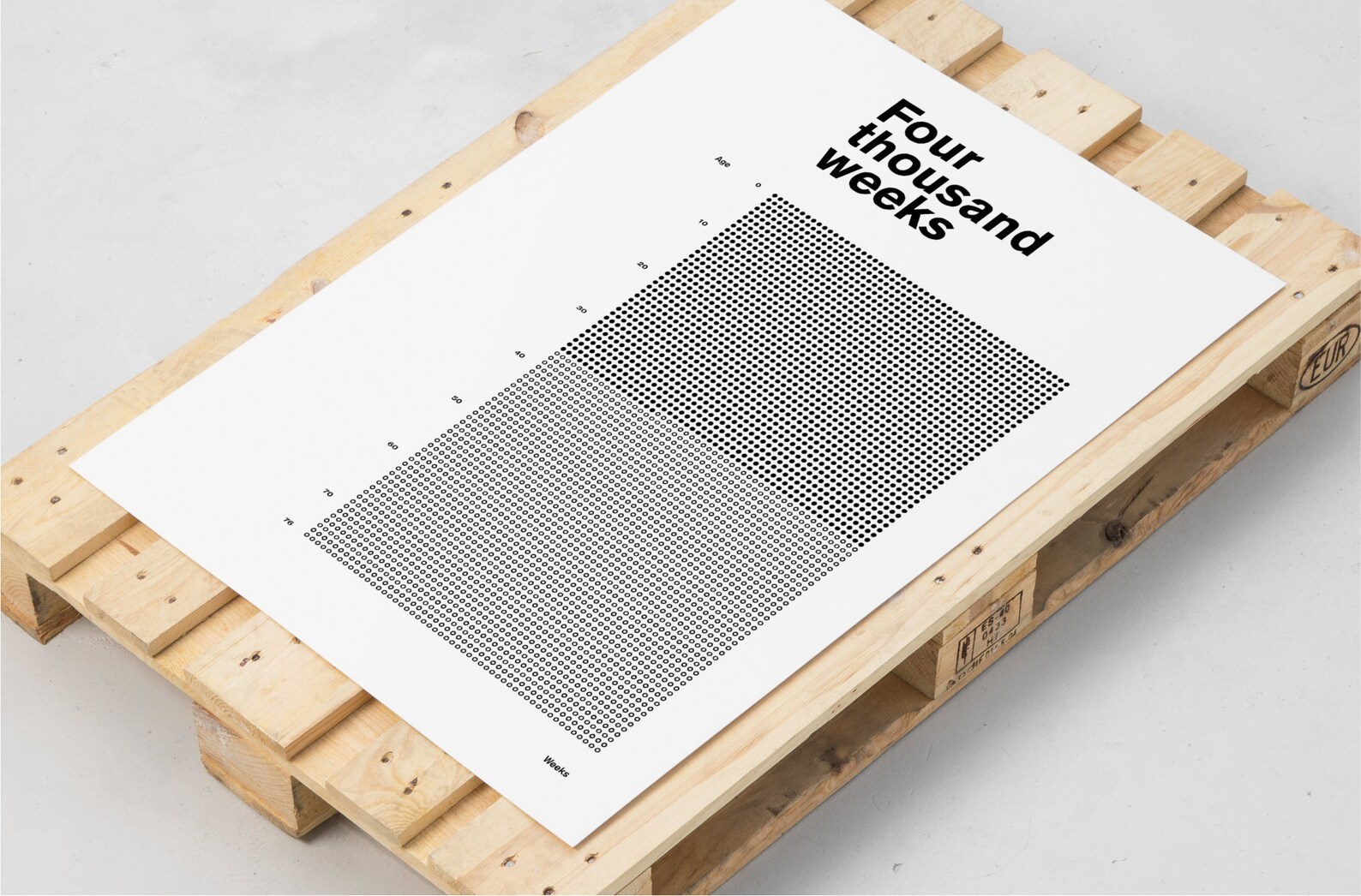
Four Thousand Weeks: Time Management for Mortals by Oliver Burkeman Burkeman’s core reminder is that time management starts with finitude, not control. You cannot optimize your way out of being limited, which is exactly why not every hour should be forced into an ROI calculation. The book helped me think more honestly about choosing what matters rather than pretending everything important can fit.
Leonardo da Vinci by Walter Isaacson What stayed with me from Isaacson’s portrait of Leonardo is how often curiosity looked inefficient up close. He followed side paths, let questions linger, and crossed between art, anatomy, engineering, and observation. That kind of wandering can look undisciplined from the outside, but it is often where original thinking begins.
What I Talk About When I Talk About Running by Haruki Murakami Murakami writes about repetition, endurance, and the inner texture of sustained practice. What I take from it is that meaningful effort is not always dramatic or visibly optimized. Sometimes the point is rhythm. Sometimes the point is showing up long enough for thought to settle into a different depth.