Essay
Leading with Technical Clarity
What I reach for when a technical decision needs to feel legible, not theatrical.
I used to think technical clarity meant having a better answer than everyone else in the room.
What I learned, mostly by getting it wrong, is that teams do not need a leader to sound certain all the time. They need the reasoning to be visible enough that the decision feels understandable, even when it is frustrating.
The hardest moments are rarely clean. A roadmap changes late. A project gets cut after real work has gone into it. An architecture idea that looked elegant on paper starts dragging in production. In those moments, people are not only reacting to the decision itself. They are reacting to whether it feels grounded or arbitrary.
Clarity is not the same as certainty
I have been in meetings where the decision was probably right, but the way it landed made it feel careless. That usually happens when the real constraint stays hidden. People hear the conclusion, but not the boundary conditions around it.
What has worked better for me is keeping the explanation simple:
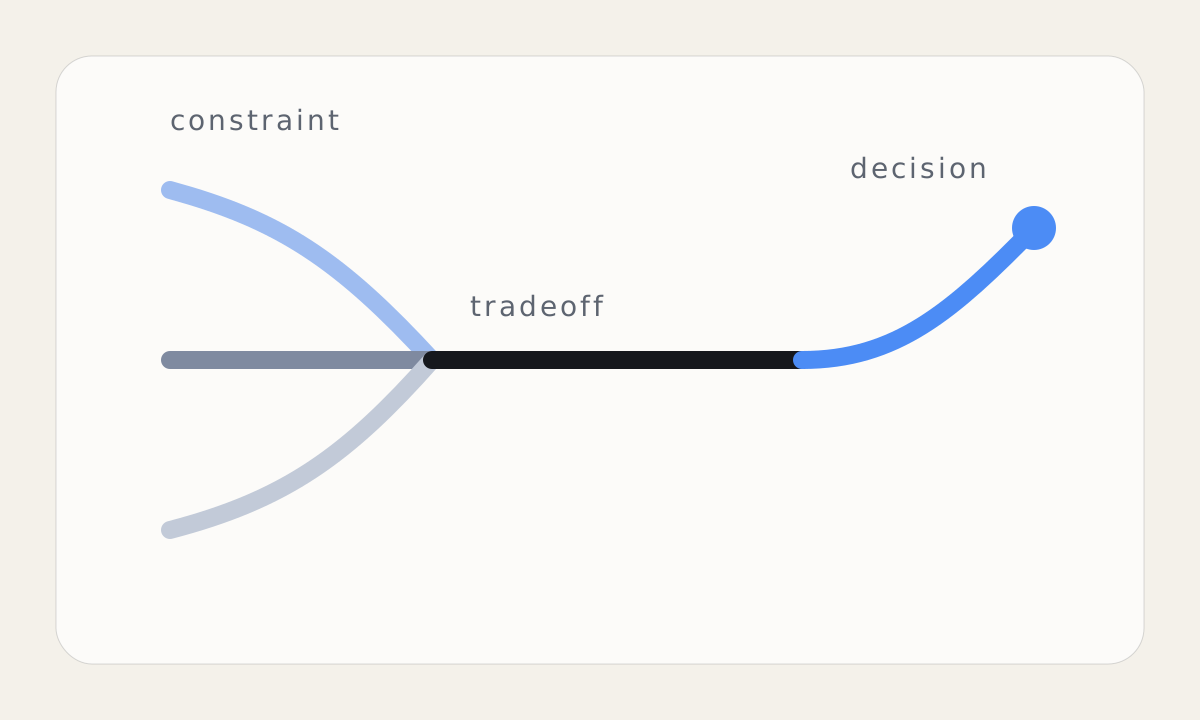
- Here is the constraint.
- Here are the tradeoffs.
- Here is why we are choosing this path now.
- Here is what would make us revisit it.
That is usually enough. It gives people something they can work with instead of forcing them to reverse-engineer your judgment.
Explain the boundary, not every detail
I also had to unlearn the habit of over-explaining. Sometimes a long explanation is just a prettier form of hedging.
The better standard is narrower: explain enough that someone else on the team could make a similar call in your absence.
When that happens, leadership starts to scale. Not because everyone agrees, but because the logic becomes reusable.
What changes in practice
When I look back at decisions that created churn on teams I have been part of, the missing piece is usually one of these:
- the real constraint was never named
- the tradeoff was implied but not spoken
- the decision horizon was left ambiguous
Naming those three things does not make disagreement disappear, but it often turns friction into coordination.
A better leadership standard
The question I try to ask now is not, “Did I sound decisive?” It is, “Did I leave behind a decision other people can work with?”
That is a quieter standard, but in practice it is the one that builds trust.